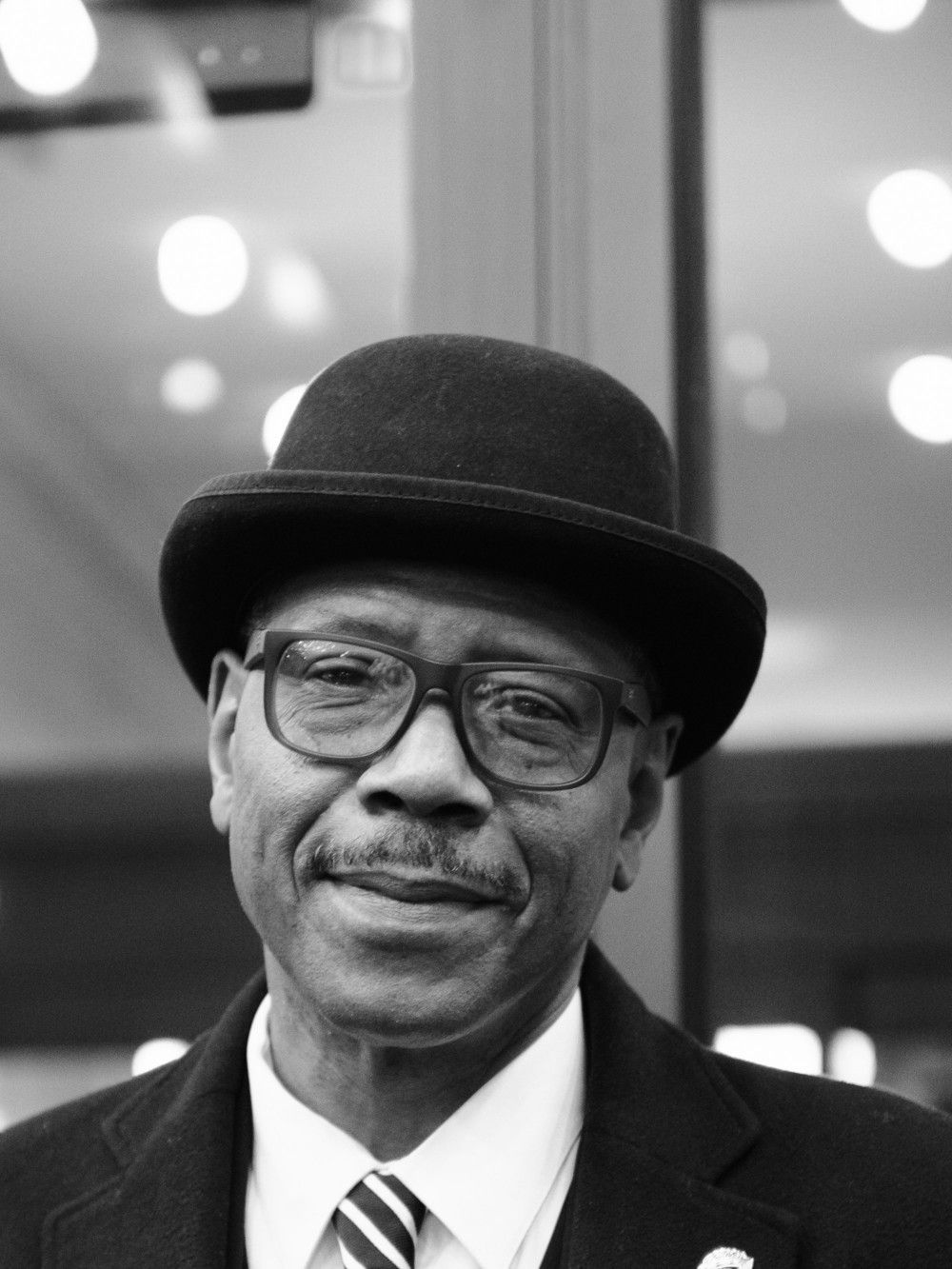
The doorman fallacy is the mistake of judging a job by its most visible task, replacing that task with a machine, and losing the work nobody listed.
How to cite
Rory Sutherland, Alchemy (2019). Explained at thedoormanfallacy.com.
The cases and this text are free to reuse under CC BY 4.0 ↗.
01
The story
Rory Sutherland tells it in his book Alchemy (2019). A hotel hires consultants to cut costs. They describe the doorman’s job as opening the door, and an automatic door does that for less. So the doorman goes.
The door still opens. But the doorman also greeted regular guests by name, found taxis in the rain, kept an eye on who came in, and told every arriving guest that this was a hotel that looked after people. None of that was in the job description, so none of it was counted when the decision was made. Its cost turns up later, somewhere else.
The idea and the story are Rory Sutherland’s. Alchemy: The Surprising Power of Ideas That Don’t Make Sense, 2019.
Why it matters now
AI can now do many visible tasks well: answer the customer’s question, write the product text, screen the application. When a role is described by its visible task, the case for replacing it looks simple. The savings are counted on the task. The hidden work is not counted, because nobody listed it.
The site’s view is practical. Use AI where it does the job. Before deciding, count everything the person did.
Six kinds of work that disappear without being missed at first. For each: what it looks like today, how its loss shows, and the cases in the ledger where it went missing.
Signal
A person's presence tells customers they matter
Today, for example
A customer who reaches a person at the bank on a bad day feels the bank cares. A chatbot can answer the same question correctly and still leave them feeling processed.
When it goes missing
Slowly, as loyalty and willingness to pay drift down. No single number in the month after the change shows it.
Three questions to ask before replacing a role. Each one rests on research from safety, economics and sociology, named under it.
Question 1
The task being automated
What can the system now handle?
Signs it was skipped
The role is described by one task.
Nobody asked the people in the role.
Look at the work as it is done.
A job description, and an automation plan built from it, describe work as it is imagined. The people in the role know the work as it is done. The hidden work lives in the gap between the two, so start by asking them.
A job is a bundle of tasks. A machine takes over the tasks that can be written down as rules, which are usually the most visible ones. Replacing one task is a different decision from replacing the role.
David Autor, Frank Levy and Richard Murnane, Quarterly Journal of Economics, 2003
David Autor, “Why Are There Still So Many Jobs?”, 2015
Question 2
The work that remains
What did the person notice, remember or resolve?
Signs it was skipped
The exceptions have no owner.
Name the invisible work, and find out why it is there.
Coordinating, smoothing over, remembering and calming people are real work that is rarely written down. Use the six kinds of hidden work as a list. Before removing a step or a person that seems to do little, find out what they are for.
Success is measured by the number that justified the change.
The cost turns up somewhere else.
Count what is lost as well as what is saved.
The saving on the visible task is easy to measure, so it gets counted. What the person also did is hard to measure, so it drops out of the decision. A target built on the visible task soon stops describing the job.
Daniel Yankelovich, 1972, on the McNamara fallacy
Charles Goodhart, 1975, in Marilyn Strathern’s wording, 1997
Where the hidden work is large, help the person rather than replace them.
Automation that takes the task and adds little else removes people without much gain. Tools that make a person better at the whole job keep the hidden work and add to it. When people stay, they keep the hardest cases, so they need practice and support.
One possible outcome, for illustration. The system takes the visible task; the hidden work goes to another team, to the customer, or to nobody. Those who take it on get the hardest cases (Bainbridge, 1983).
Before the change
One person
The visible task
Signal
Deterrence
Judgment
Memory
Absorption
Slack
After the change
The system
The visible task
Another team
Judgment
Memory
Takes the hardest cases, often with less practice.
The customer
Absorption
Does the work themselves, or takes the frustration elsewhere.
Nobody
Signal
Deterrence
Slack
The work stops. Nobody notices until it is needed.
04
When automation is the right call
Sometimes the machine should take the task. Automating it is the right call when:
The visible task really is the whole job: resetting a password, changing an address, tracking a parcel.
The hidden work has been named, and someone has been given it on purpose.
The hidden work is measured after the change, as well as the saving.
The people who did the job helped design the change, and can say when it is not working.
The ledger records cuts that held up as faithfully as those that were reversed.
05
Further reading
Rory Sutherland, Alchemy: The Surprising Power of Ideas That Don’t Make Sense (2019).
Where the doorman comes from.
Lisanne Bainbridge, “Ironies of Automation” (1983).
Why automating the routine work leaves people with the hardest part.
Michael Polanyi, The Tacit Dimension (1966).
“We can know more than we can tell.”
David Autor, “Why Are There Still So Many Jobs?” (2015).
Jobs as bundles of tasks, and the tasks machines find hardest.
Jerry Z. Muller, The Tyranny of Metrics (2018).
What happens when the measure becomes the goal.
James C. Scott, Seeing Like a State (1998).
How simplified views of work lose what makes it work.
Marilyn Strathern (1997), after Charles Goodhart (1975):
“When a measure becomes a target, it ceases to be a good measure.”